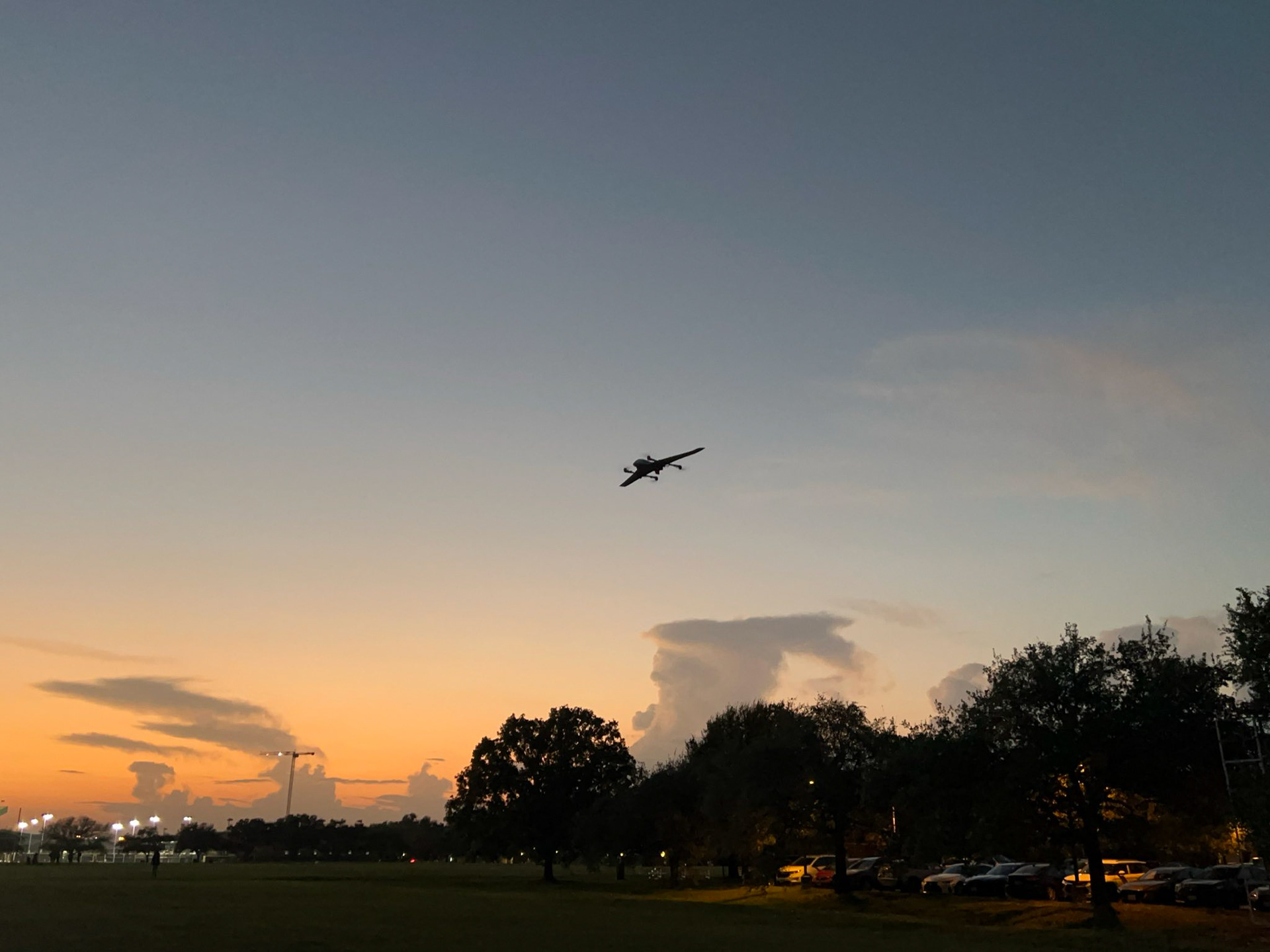
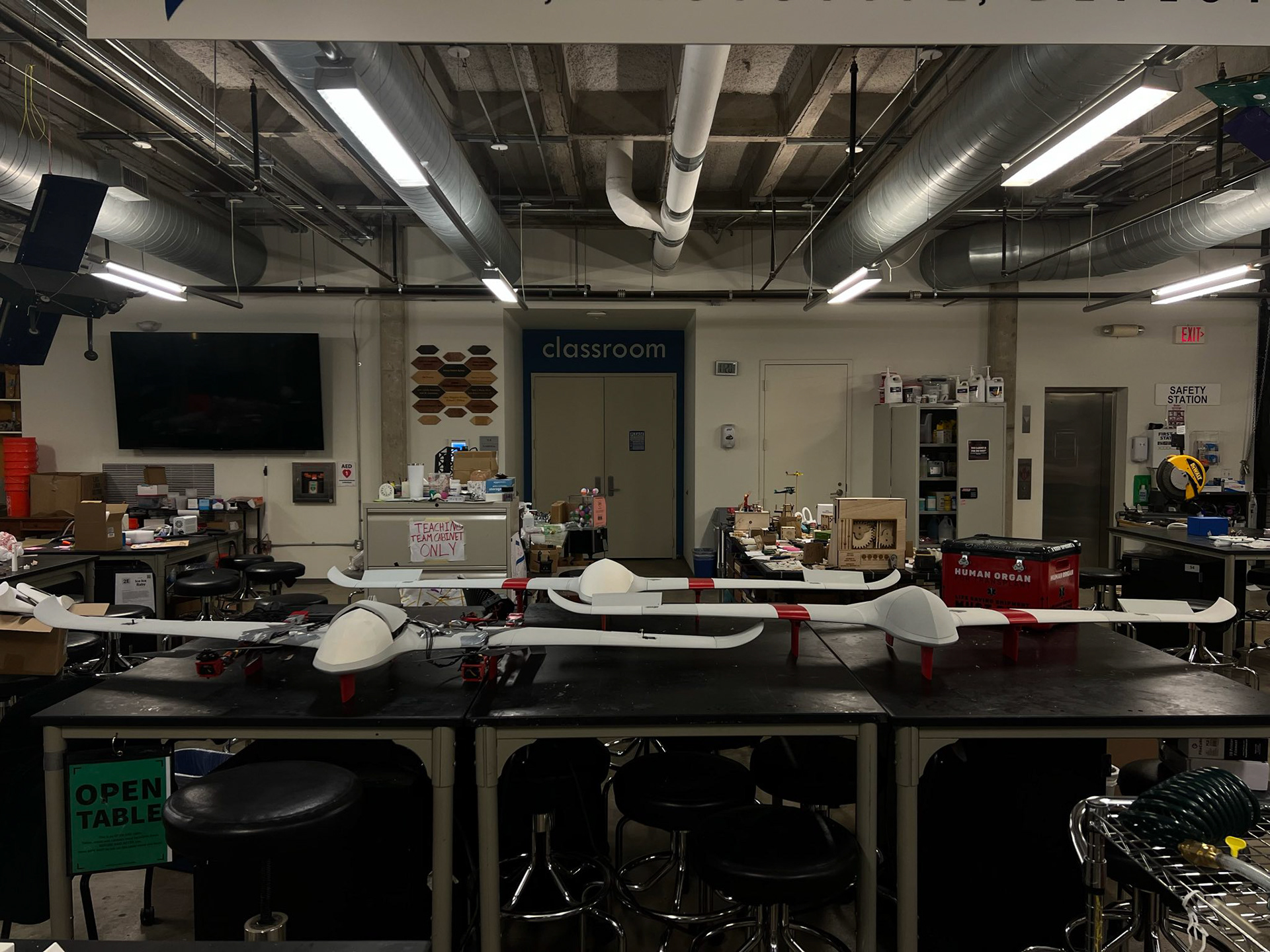
A test-flight of our drone
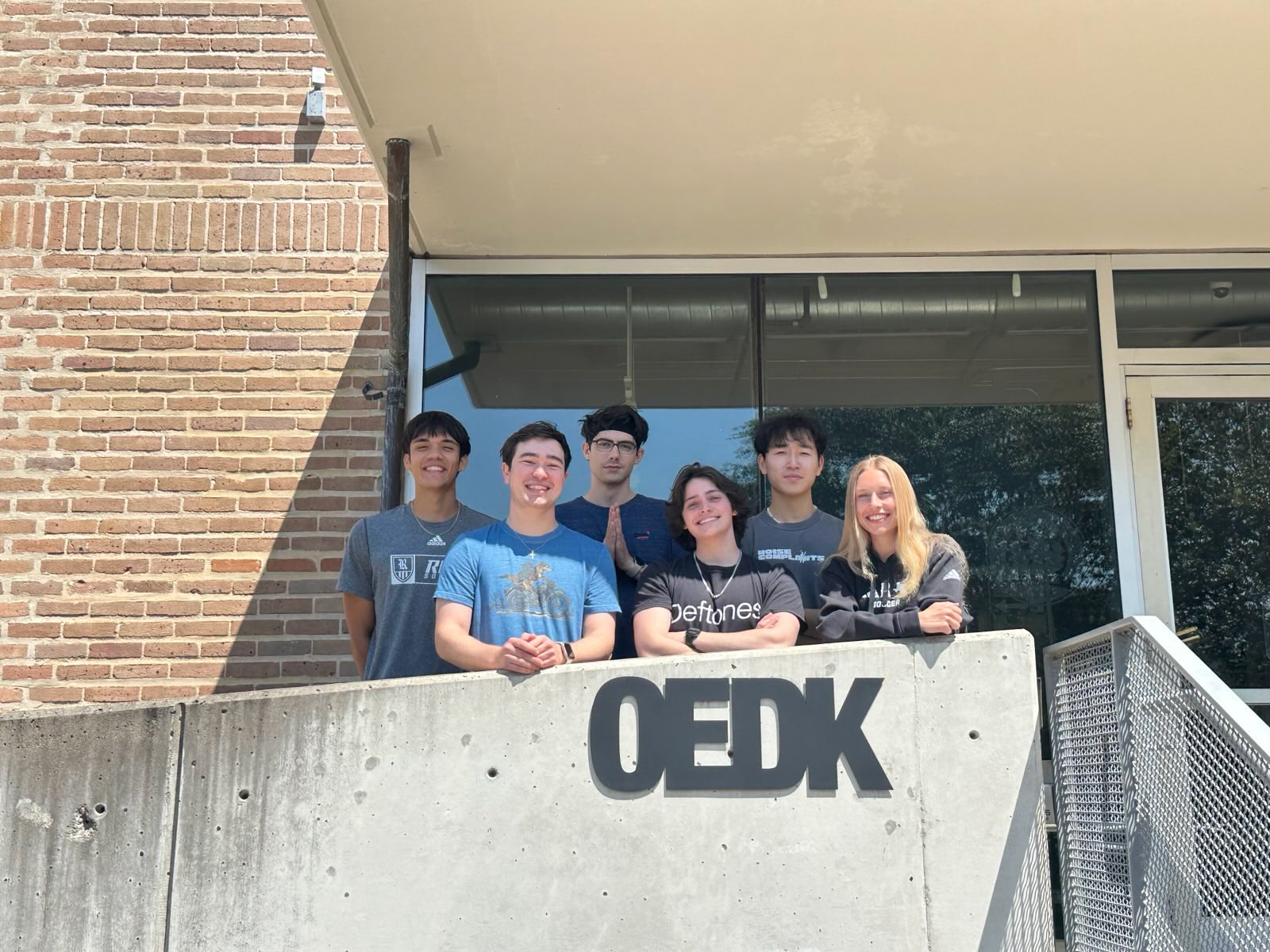
Group photo of the engineering team
As part of my senior capstone project, I was a member of a six-engineer team developing an autonomous VTOL drone designed to transport sensitive medical biologics such as organs, blood, and antivenom. Haast Autonomous is a startup founded by Rice students with the goal of fixing major inefficiencies in the medical transport system. Today, the process relies on private jets, ambulances, and couriers, creating excessive costs, delays, and handoffs. Roughly 40% of donor organs go unused due to these inefficiencies.
Our system aims to reduce costs, complexity, and risk by enabling direct, autonomous transport.
READ OUR RICE NEWS ARTICLE HERE
Our system aims to reduce costs, complexity, and risk by enabling direct, autonomous transport.
READ OUR RICE NEWS ARTICLE HERE
VEHICLE AND ITERATION
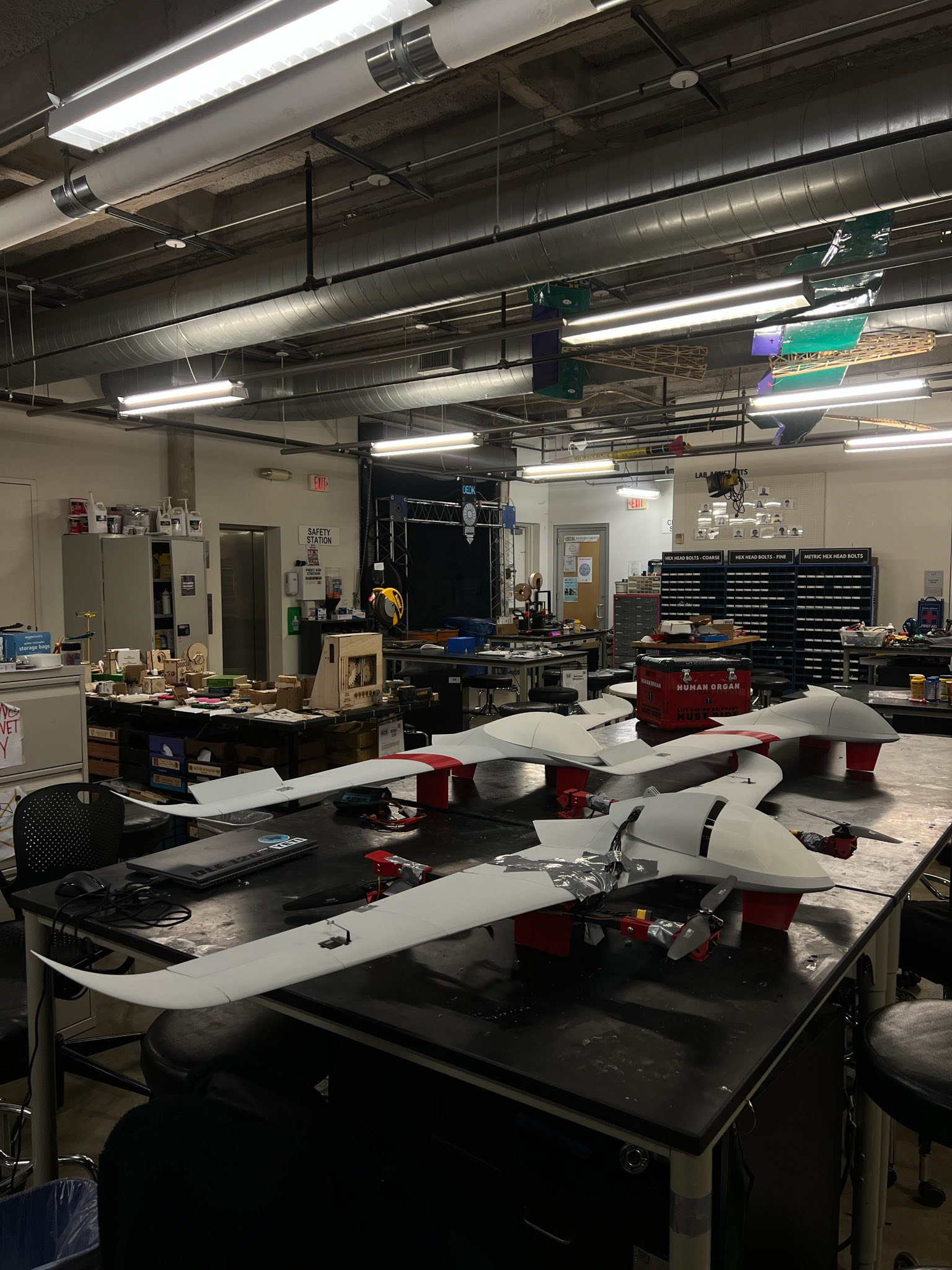
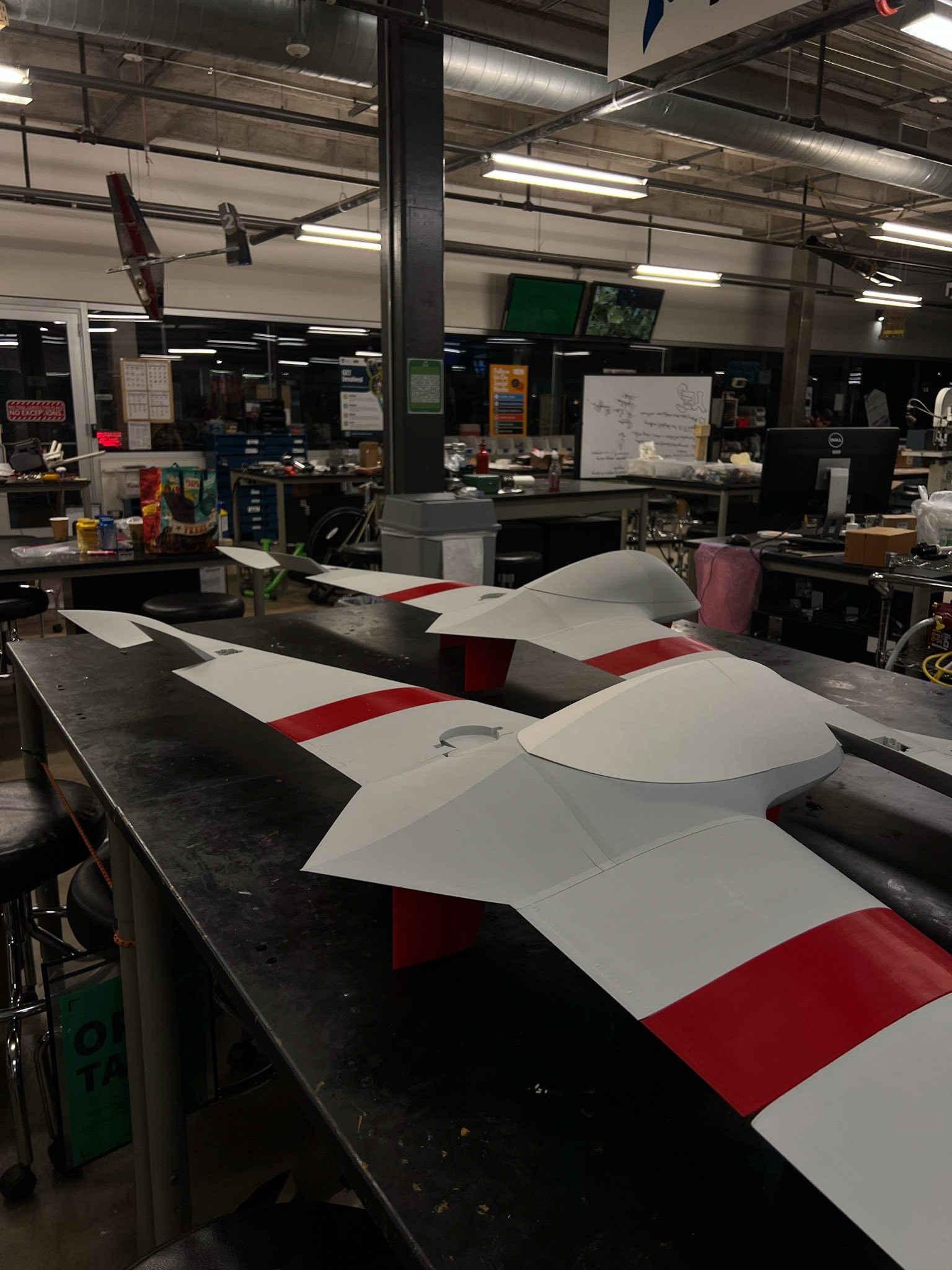
The current iteration of the drone is a quarter-scale pilot-trial model designed to carry a 4 × 4 × 6 inch payload, weighing up to 1 kg, over distances exceeding 50 km. Rapid iteration is central to our approach. We have used 3D printing to prototype aggressively, often manufacturing and flight-testing a revised airframe every week. This allows us to validate design changes quickly instead of locking into slow, traditional development cycles. Once this quarter-scale drone has run its paces, Haast plans to move onto a larger aircraft that can transport larger payloads across longer distances.
MATERIALS
My work on the team focused on part manufacturing, material selection, and weight optimization.
We printed the airframe using PLA Aero and ASA Aero due to their active foaming properties, which dramatically reduces weight while maintaining stiffness. Higher-stress components are printed in PPA-CF, ASA-CF, or ABS for strength and durability.
Printing PPA-CF presented a major challenge. The Rice makerspace did not allow us to print this material on the fancy Bambulabs, so I retrofitted an older Prusa i3 MK3 to handle a filament it was never designed to print. Through tuning, enclosure control, and process experimentation, I developed a reliable workflow for producing high strength-to-weight PPA-CF parts on that machine, outperforming comparable ABS components.
PROCESS INNOVATION
We discovered that printing Aero filaments like standard solid filaments was inefficient. It caused surface defects, wasted material, and unnecessary mass. To fix this, I developed a printing method specifically optimized for Aero materials.
By introducing precise ultra-thin grid-like cuts throughout the part in cad, it tricks the slicer into treating internal features as part of the outer contour when spiral vase-mode is enabled. After printing, a thin coat of sealant adds surface rigidity and durability. This method:
- Reduces part weight, print time, and material usage by roughly 50%
- Virtually eliminates surface defects
- Virtually eliminates surface defects
Simply by changing how the parts were printed rather than redesigning the vehicle, I reduced the total drone mass by about 0.5 kg, which is a significant improvement for a platform of this size.
CNC FOAM-CORE CARBON FIBER WINGS
To transition from prototyping to a more scalable manufacturing process, I replaced our 3D printed wing construction with a CNC-based foam core and composite layup workflow.
To transition from prototyping to a more scalable manufacturing process, I replaced our 3D printed wing construction with a CNC-based foam core and composite layup workflow.
I developed a process using XPS (extruded polystyrene) sheets, where a CNC router machines the external wing geometry and internal spar channels across four operations. Each wing core takes approximately one hour to machine, enabling consistent and repeatable fabrication.
Unlike the previous 3D printed design, which required multiple bonded sections, this process produces a single-piece core that improves structural continuity, stiffness, and durability.
After machining, the cores are wrapped in carbon fiber, saturated with resin, and cured using a multi-layer vacuum bagging setup. Multiple resin passes are applied to achieve a smooth, durable surface finish, followed by final trimming using a dremel.
Compared to the original 3D printed wings, this approach results in a significantly stronger and more durable structure while improving repeatability and moving the design toward a production-ready manufacturing method.
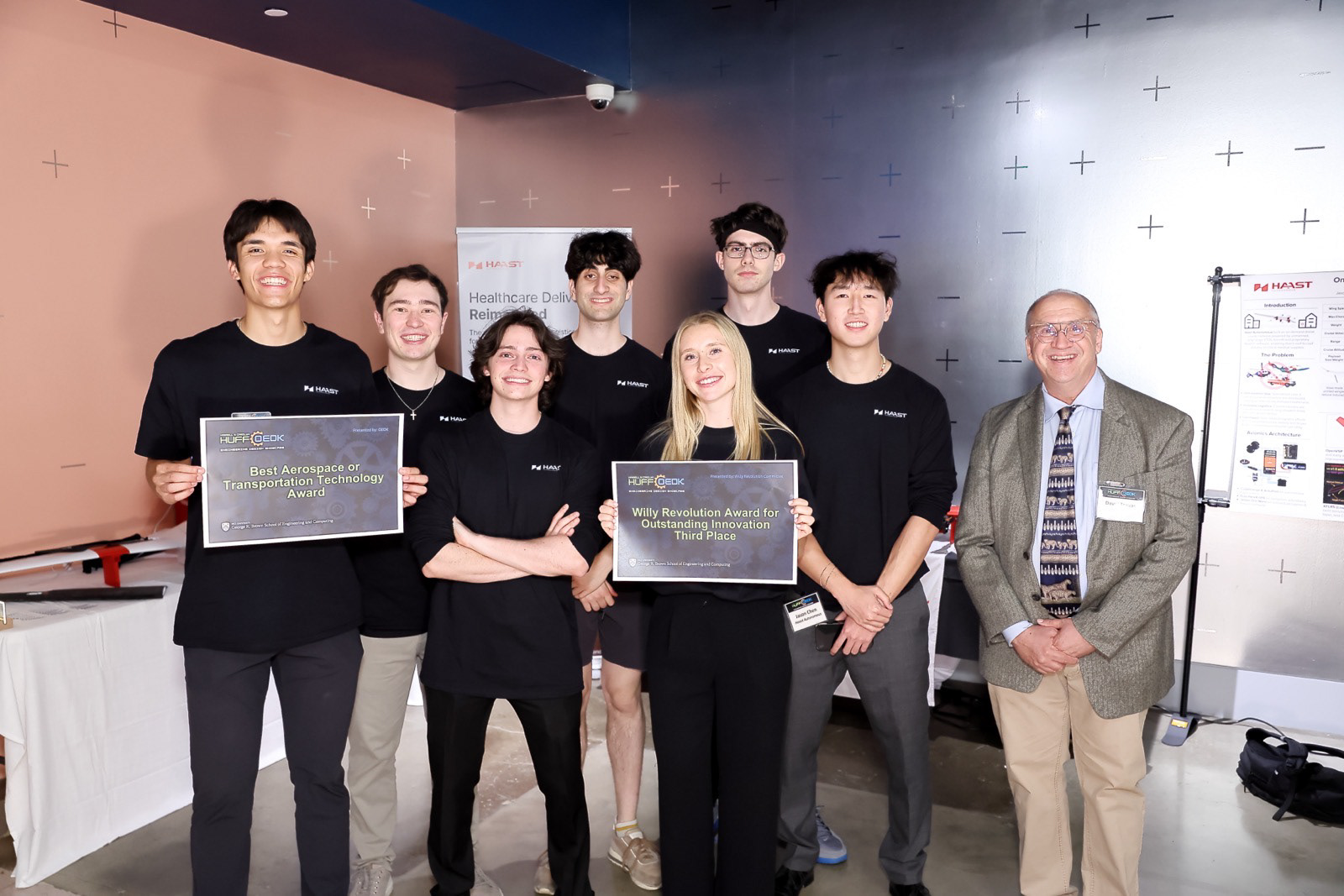
Team photo at the showcase
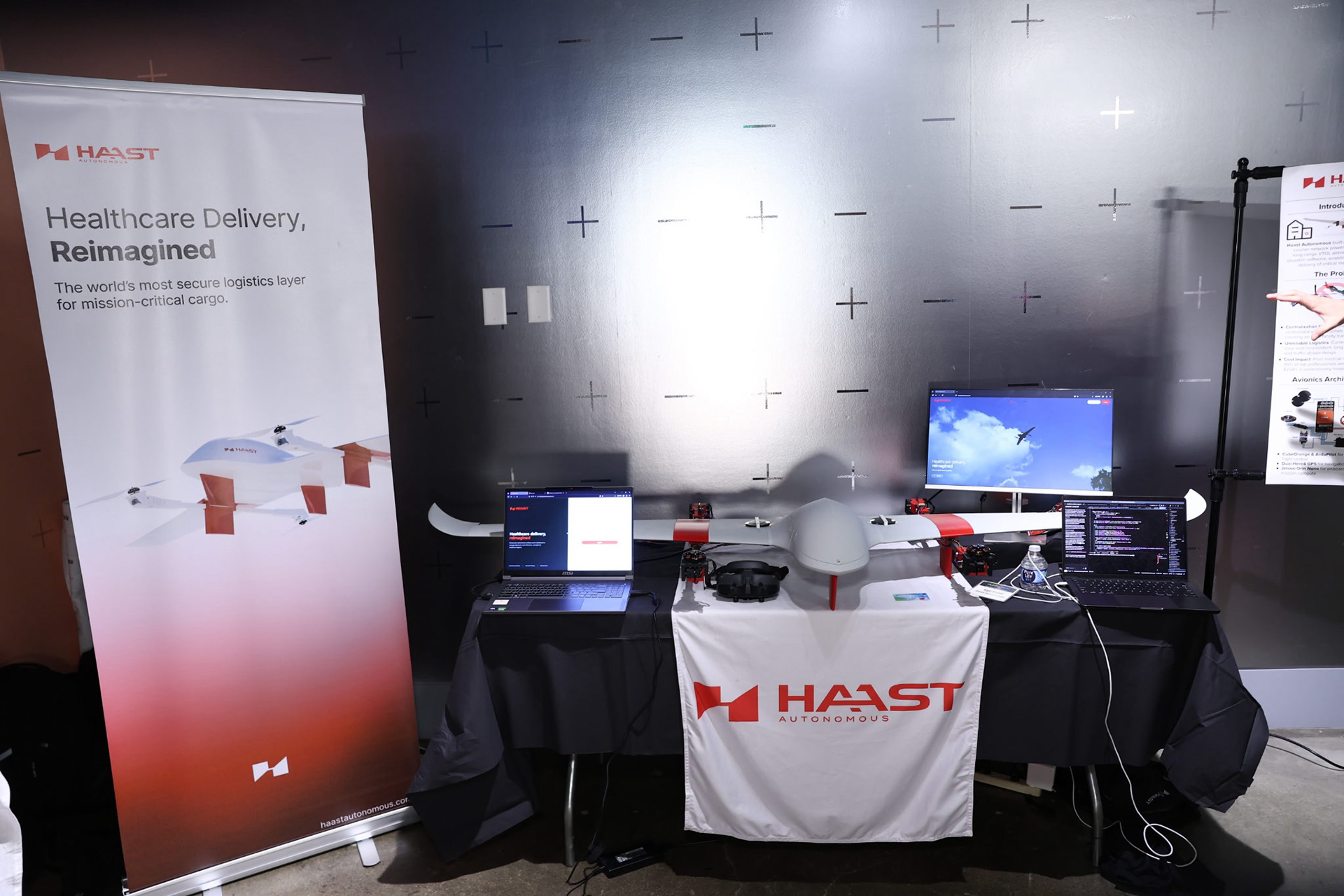
Our booth at the showcase
HUFF OEDK ENGINEERING DESIGN SHOWCASE
At the annual Rice OEDK Engineering Design Showcase, Haast competed against 78 multidisciplinary engineering teams for $14,000 in total awards.
The project was recognized with:
- Best Aerospace or Transportation Technology Award
- Willy Revolution Award for Outstanding Innovation (Third Place)
- Willy Revolution Award for Outstanding Innovation (Third Place)
Haast was one of only two teams to receive awards in multiple categories and was the highest-ranked Mechanical Engineering team based on judge scoring, placing third overall across all engineering disciplines.
Due to showcase rules, receiving the Willy Revolution Award made us ineligible for additional high-prize categories.
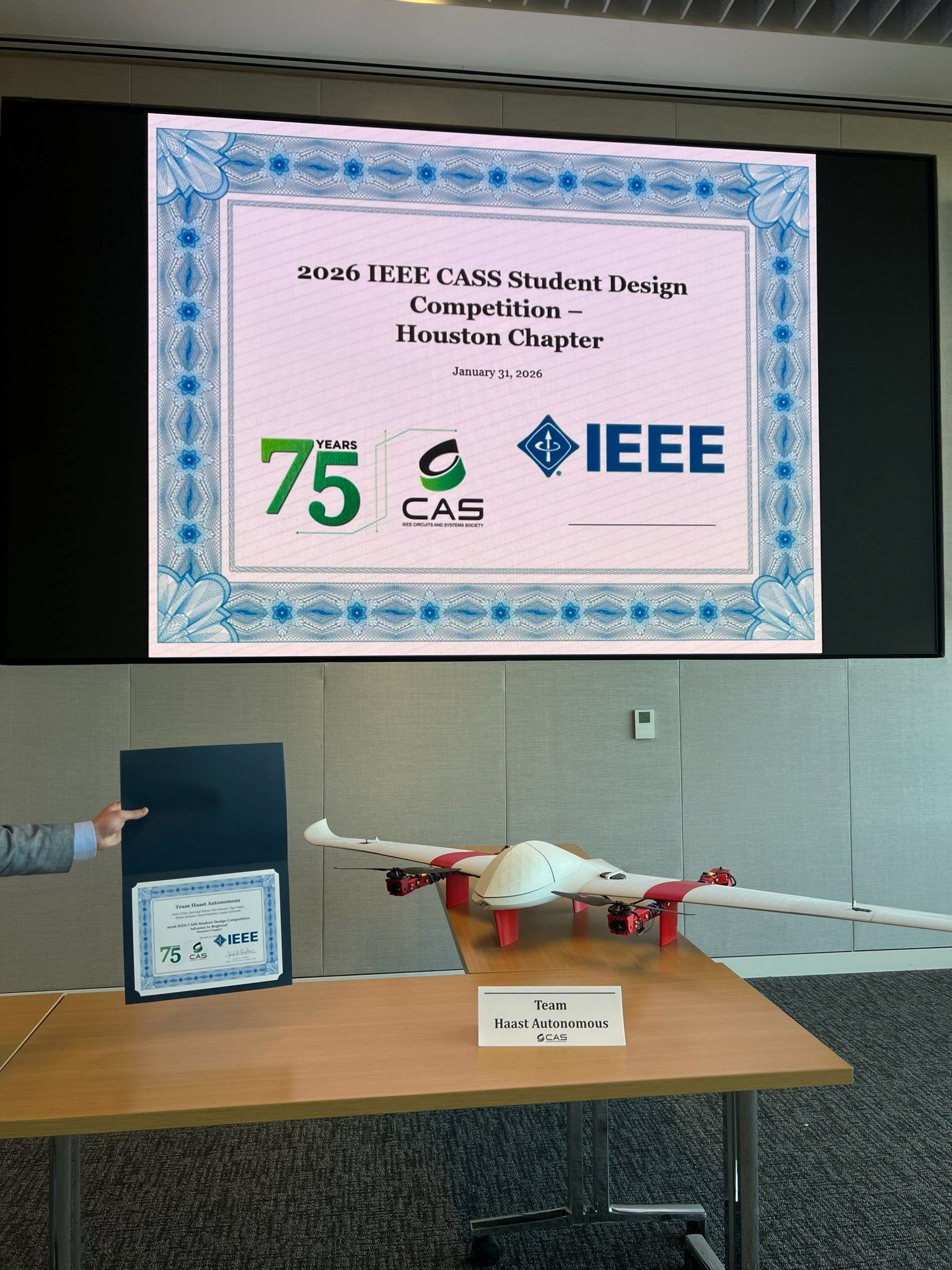
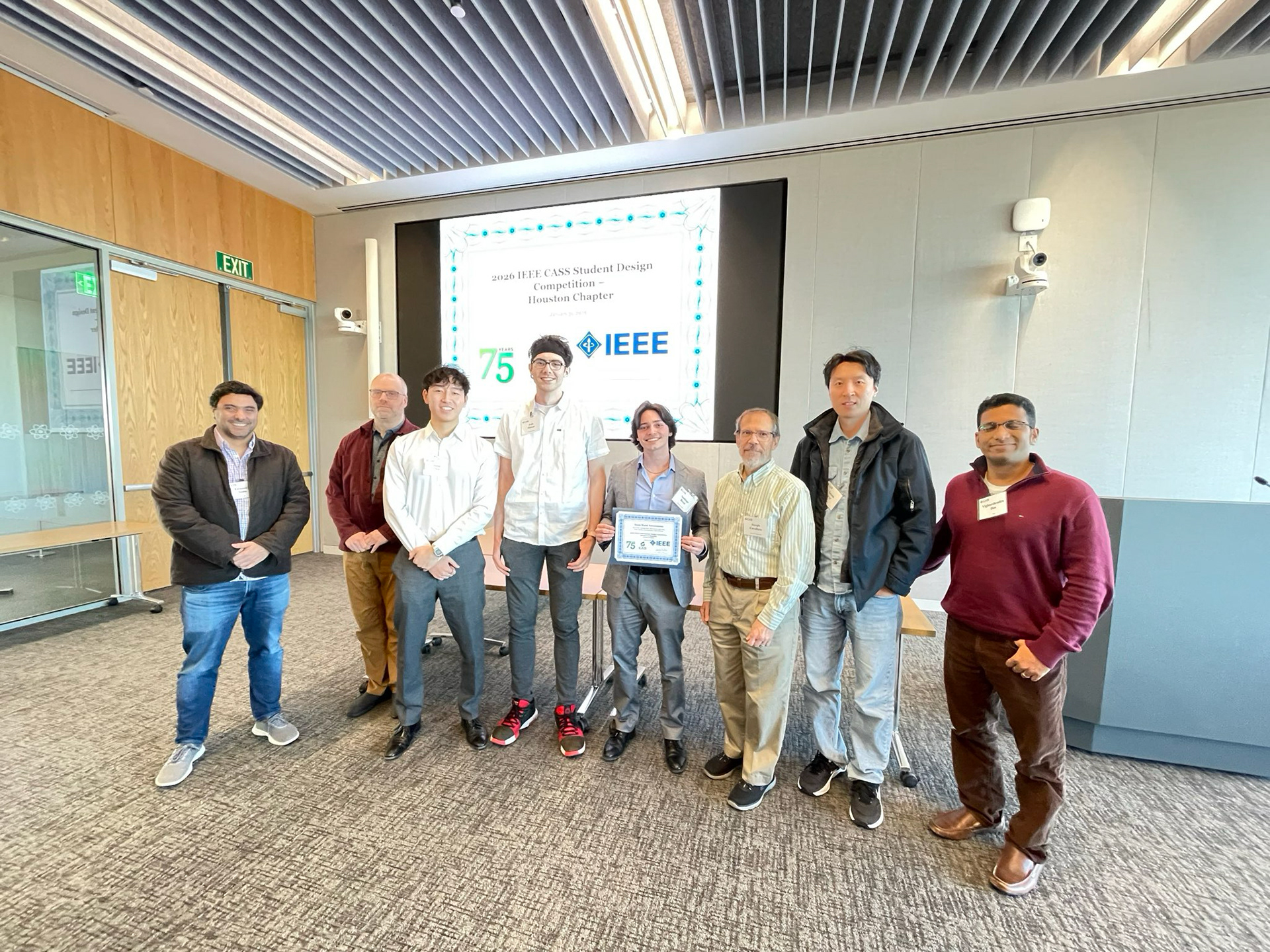
IEEE CASS STUDENT DESIGN COMPETITION
The Haast team competed in the IEEE Circuits and Systems Society (CASS) Student Design Competition, an international engineering competition where teams present and demo their projects to a panel of judges. We advanced to the second round and represented the Houston chapter at the regional level.