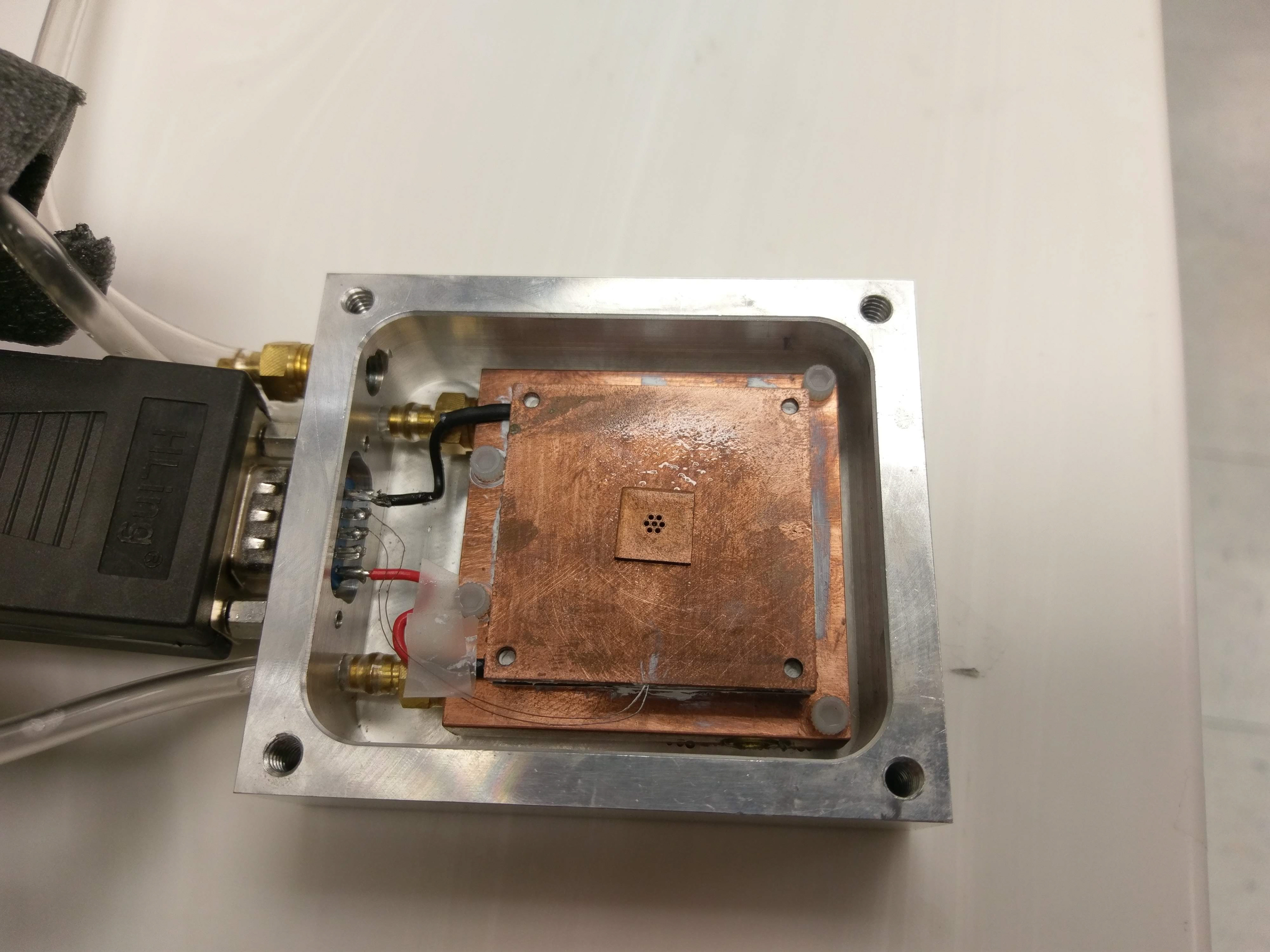
As a high school sophomore, I interned in the Drori Lab through my school’s Science Research Initiative (SRI) program. Over the course of two months, I worked full-time in a research lab studying how ice-binding antifreeze glycoproteins affect the freezing behavior of microscopic ice crystals.
I ran daily experiments using a microscope and custom-built cold-stage with extremely fine temperature control (±0.002 °C). My work involved preparing samples, manually controlling temperature sweeps, running experiments through LabVIEW, and logging results in Excel. Once trained, I worked mostly independently and typically ran multiple experiments per day.
Although I did not contribute to writing or receive authorship due to my role and age, data from experiments I ran was later used in peer-reviewed publications. This experience was my first exposure to real experimental research and taught me how careful setup, repeatability, and data quality matter in practice.
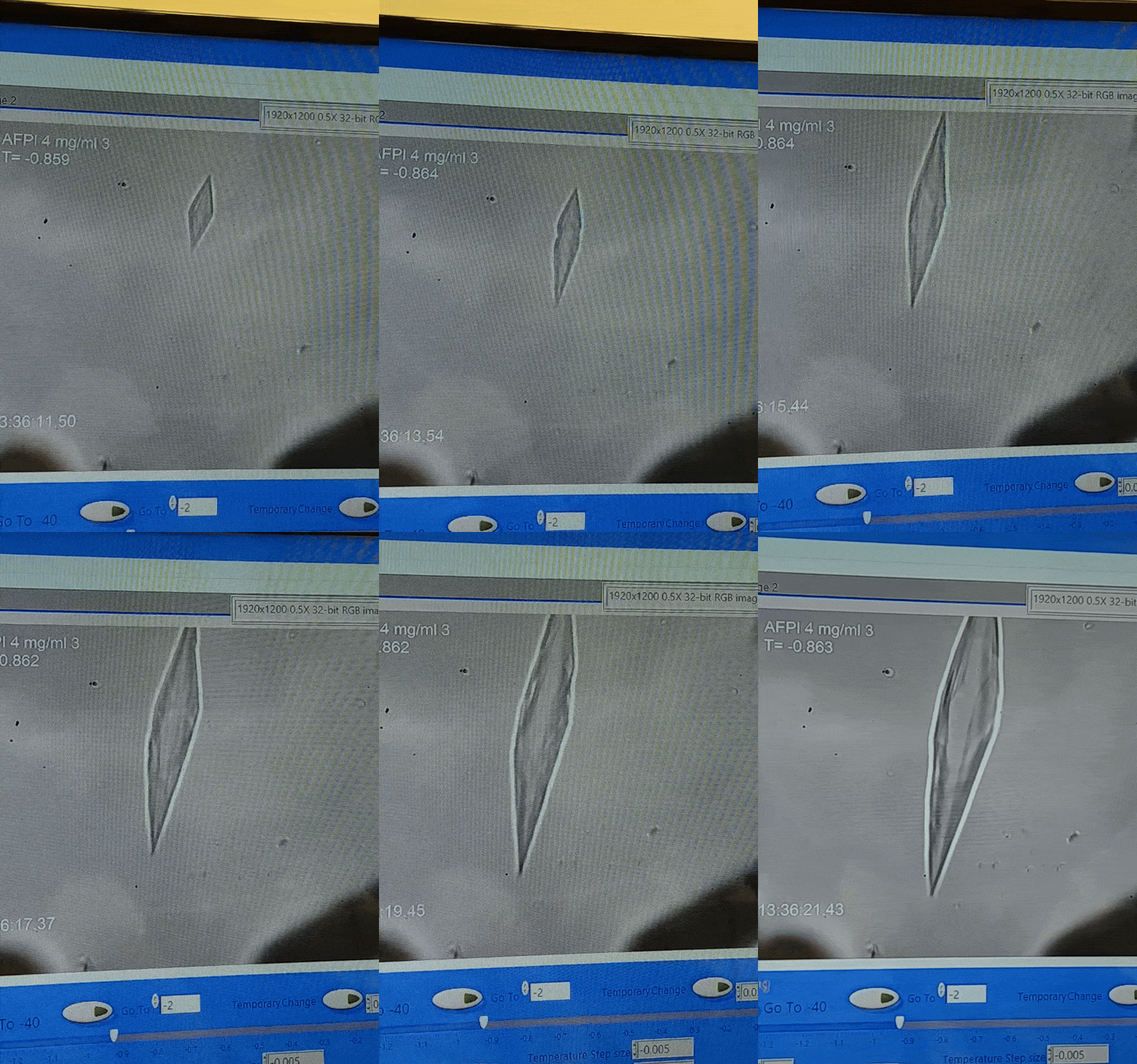
A microscopic ice crystal "bursting" once it hits a certain temperature threshold.